Physical Address
304 North Cardinal St.
Dorchester Center, MA 02124
Physical Address
304 North Cardinal St.
Dorchester Center, MA 02124
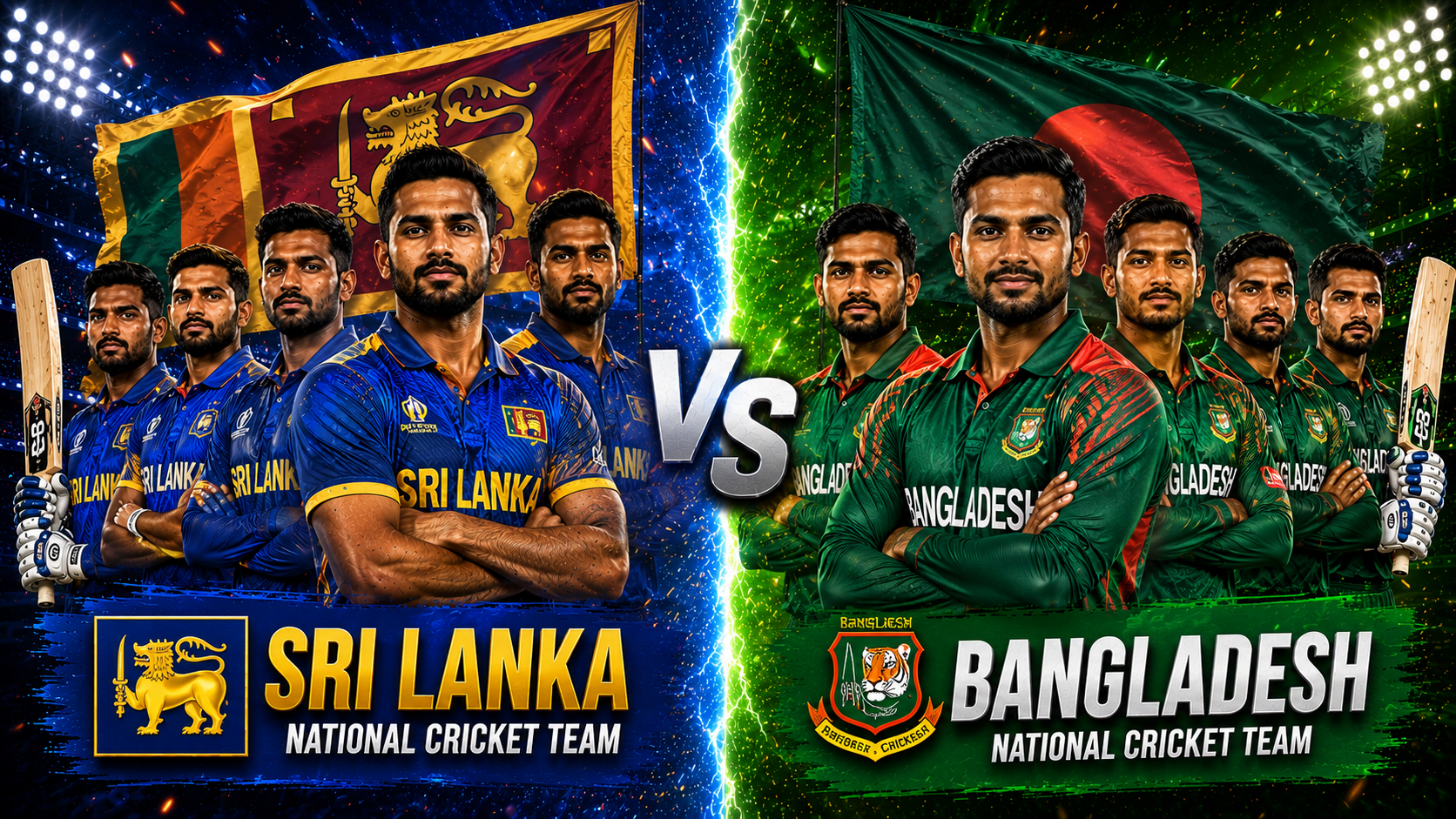
The contests between Sri Lanka and Bangladesh have grown into a compelling cricket rivalry shaped by shifting dominance, evolving strategies, and rising intensity. In the early years, one side clearly controlled most encounters, but over time the gap narrowed as the other team developed stronger batting depth, improved bowling discipline, and better game awareness. Every match between these two teams now carries pressure, emotion, and unpredictable momentum swings. From ODI battles to fast-paced T20 clashes, their encounters have produced memorable performances, dramatic finishes, and standout individual brilliance. This rivalry reflects not just statistics but a journey of growth, resilience, and competitive spirit in international cricket.
| Date | Format | Venue | Winner | Margin | Score 1 | Score 2 |
|---|---|---|---|---|---|---|
| September 2025 | T20I | Dubai | Bangladesh | 4 wickets | Sri Lanka 153/6 | Bangladesh 157/6 |
| September 2025 | T20I | Abu Dhabi | Sri Lanka | 6 wickets | Bangladesh 145/8 | Sri Lanka 146/4 |
| July 2025 | T20I | Colombo | Bangladesh | 8 wickets | Sri Lanka 132/9 | Bangladesh 135/2 |
| July 2025 | T20I | Dambulla | Bangladesh | 83 runs | Bangladesh 198/4 | Sri Lanka 115 |
| July 2025 | ODI | Colombo | Sri Lanka | 99 runs | Sri Lanka 312/6 | Bangladesh 213 |
| July 2025 | ODI | Colombo | Bangladesh | 16 runs | Bangladesh 265/7 | Sri Lanka 249 |
| July 2025 | ODI | Colombo | Sri Lanka | 77 runs | Sri Lanka 284/5 | Bangladesh 207 |
| Format | Total Played | Sri Lanka Wins | Bangladesh Wins | Ties | No Result | Draws |
|---|---|---|---|---|---|---|
| Test Matches | 26 | 20 | 1 | 0 | 0 | 5 |
| One Day Internationals | 56 | 44 | 10 | 0 | 2 | 0 |
| Twenty20 Internationals | 20 | 13 | 7 | 0 | 0 | 0 |
| Overall Combined | 102 | 77 | 18 | 0 | 2 | 5 |
| Home Matches (SL) | 45 | 36 | 7 | 0 | 2 | 0 |
| Away Matches (BAN) | 36 | 24 | 9 | 0 | 0 | 3 |
| Neutral Venues | 21 | 17 | 2 | 0 | 0 | 2 |
| Player | Team | Matches | Innings | Total Runs | Average | Highest Score |
|---|---|---|---|---|---|---|
| Kumar Sangakkara | Sri Lanka | 15 | 21 | 1816 | 95.57 | 319 |
| Mushfiqur Rahim | Bangladesh | 32 | 41 | 1342 | 40.66 | 200 |
| Mahela Jayawardene | Sri Lanka | 13 | 17 | 1102 | 73.46 | 166 |
| Tamim Iqbal | Bangladesh | 28 | 34 | 1089 | 33.00 | 127 |
| Shakib Al Hasan | Bangladesh | 26 | 32 | 973 | 31.38 | 116 |
| Kusal Mendis | Sri Lanka | 22 | 26 | 924 | 38.50 | 124 |
| Mahmudullah | Bangladesh | 27 | 31 | 865 | 32.03 | 136 |
| Player | Team | Matches | Innings | Wickets | Best Bowling | Economy |
|---|---|---|---|---|---|---|
| Muttiah Muralitharan | Sri Lanka | 12 | 19 | 62 | 7/30 | 2.45 |
| Shakib Al Hasan | Bangladesh | 26 | 30 | 48 | 5/70 | 3.61 |
| Rangana Herath | Sri Lanka | 9 | 15 | 39 | 5/12 | 2.82 |
| Lasith Malinga | Sri Lanka | 18 | 18 | 31 | 6/38 | 5.12 |
| Mashrafe Mortaza | Bangladesh | 21 | 21 | 26 | 4/44 | 4.88 |
| Taskin Ahmed | Bangladesh | 14 | 14 | 22 | 4/54 | 5.34 |
| Mustafizur Rahman | Bangladesh | 12 | 12 | 19 | 4/21 | 5.65 |
The early phase of contests between these two Asian teams was heavily one-sided, with experience and discipline playing a major role. Early Encounters That Shaped the Rivalry shows how one side dominated through strong batting depth and sharper bowling control, while the other side struggled to convert starts into match-winning performances. In these initial meetings, the gap in temperament was clear, especially during pressure overs where wickets fell quickly. However, these matches also laid the foundation for learning, as the underdog team slowly began to understand international match tempo and spin challenges. Fielding errors and middle-order collapses were common, but each game added valuable experience. Over time, small improvements in strike rotation and bowling accuracy started to appear, hinting at a future shift in competitiveness. These encounters were less about balance and more about growth, where one team asserted authority while the other absorbed lessons that would later transform their cricketing identity.
| Match | Year | Winner | Key Performance |
| ODI 1 | 2002 | Sri Lanka | Top order batting dominance |
| ODI 2 | 2003 | Sri Lanka | Spin bowling control |
| ODI 3 | 2004 | Sri Lanka | Middle order partnership |
| ODI 4 | 2005 | Sri Lanka | Early wickets impact |
As time progressed, the matches began showing a noticeable shift in intensity. First Signs of Competitive Resistance highlights the phase where the developing side started challenging stronger opponents with improved batting confidence and smarter bowling rotations. Unlike earlier matches, these games were not one-sided, as partnerships began forming under pressure. The lower middle order played a crucial role in stabilizing innings after early wickets. Fielding standards also improved, saving crucial runs in tight situations. Although the experienced team still held the upper hand, the margin of victory started shrinking. Tactical changes, including better use of spinners in middle overs and more aggressive powerplay batting, made contests more balanced. This phase marked the beginning of belief, where the underdog team realized they could compete rather than just survive.
| Match | Year | Winner | Key Performance |
| ODI 5 | 2006 | Sri Lanka | Chase control |
| ODI 6 | 2007 | Sri Lanka | Death overs bowling |
| ODI 7 | 2008 | Bangladesh | Batting partnership strength |
| ODI 8 | 2009 | Sri Lanka | Experience in pressure finish |
Tournament environments brought a new level of intensity to these encounters. Tournament Pressure and Asia Cup Clashes explores how high stakes matches changed team behavior significantly. In these contests, both sides displayed more aggressive intent, especially in powerplays and death overs. The presence of knockout pressure often led to unexpected collapses and dramatic recoveries. Tactical planning became more visible, with captains adjusting bowling changes more frequently. One side relied on spin-heavy strategies, while the other focused on building partnerships before accelerating late in the innings. Several matches went down to the final overs, creating unforgettable moments for fans. These encounters also highlighted emotional pressure, where crowd energy played a major role in momentum swings.
| Match | Year | Winner | Key Performance |
| Asia Cup 2010 | 2010 | Sri Lanka | Spin attack dominance |
| Asia Cup 2012 | 2012 | Bangladesh | Late batting surge |
| Asia Cup 2014 | 2014 | Sri Lanka | Tactical bowling changes |
| Asia Cup 2016 | 2016 | Bangladesh | Pressure chase execution |
Over the years, one team significantly improved its consistency, leading to more balanced outcomes. Rise of a Stronger Contender focuses on how structured domestic cricket, improved coaching, and international exposure helped reduce performance gaps. Batting became more stable, with top-order players taking responsibility for long innings. Bowling attacks also became more disciplined, focusing on line and length rather than variation alone. In several matches, the stronger team had to fight harder than expected, indicating a clear shift in competitive dynamics. This phase marked the transition from predictable results to uncertain outcomes, making every match more exciting. Even experienced opponents began respecting the new level of resistance, as close finishes became more frequent.
| Match | Year | Winner | Key Performance |
| ODI 9 | 2017 | Bangladesh | Chase stability |
| ODI 10 | 2018 | Sri Lanka | Spin comeback |
| ODI 11 | 2019 | Bangladesh | Middle order control |
| ODI 12 | 2020 | Sri Lanka | Bowling discipline |
Batting often decided the flow of matches, and Batting Battles and Key Partnerships highlights how crucial stands shaped outcomes. Strong opening partnerships provided momentum, while middle-order resilience helped recover from early damage. One side traditionally relied on technical stroke play, while the other gradually introduced aggressive shot-making. Several matches featured century partnerships that shifted pressure completely. Strike rotation and running between wickets also improved significantly over time. In high-pressure games, one breakthrough often triggered a collapse, showing how fragile momentum could be. However, modern matches show greater maturity in handling pressure situations, with batters pacing innings more effectively.
| Match | Year | Winner | Key Performance |
| ODI 13 | 2021 | Bangladesh | Opening stand 120+ |
| ODI 14 | 2022 | Sri Lanka | Middle order recovery |
| ODI 15 | 2023 | Bangladesh | Finishing acceleration |
| ODI 16 | 2024 | Sri Lanka | Anchoring century |
Bowling has always played a defining role in shaping results. Bowling Strategies and Tactical Evolution focuses on how teams adapted their bowling plans over time. Early dominance came from spin control, especially in subcontinental conditions where pitches assisted turn. Later, pace bowlers became more effective with reverse swing and death-over yorkers. Captains experimented with attacking field placements and flexible bowling rotations. Variations such as slower balls and cutters became essential in T20 formats. These tactical changes made matches less predictable and more competitive. Bowlers who could maintain pressure during middle overs often decided the match outcome.
| Match | Year | Winner | Key Performance |
| ODI 17 | 2022 | Sri Lanka | Spin control spell |
| ODI 18 | 2023 | Bangladesh | Death over precision |
| ODI 19 | 2024 | Sri Lanka | Powerplay wickets |
| ODI 20 | 2025 | Bangladesh | Tactical bowling success |
In recent years, the rivalry has reached a more balanced stage. Modern Era Balance and Emotional Pressure reflects how both teams now approach matches with equal confidence and preparation. Neither side dominates consistently anymore, and results often depend on small moments such as dropped catches or quick partnerships. Fans from both nations bring intense emotional energy, making every match feel like a high-pressure contest. Players are now more mentally prepared, using data analysis and match simulations. Despite improvements, unpredictability remains a key feature, keeping the rivalry alive and exciting. Every encounter now feels like a fresh battle rather than a predictable outcome.
| Match | Year | Winner | Key Performance |
| ODI 21 | 2025 | Bangladesh | Chase under pressure |
| ODI 22 | 2025 | Sri Lanka | Bowling comeback |
| T20 1 | 2026 | Bangladesh | Power hitting finish |
| T20 2 | 2026 | Sri Lanka | Early wickets control |
The rivalry between Sri Lanka and Bangladesh has transformed from a one-sided contest into a closely fought cricketing battle. What once showed clear superiority has now evolved into a balanced competition where small moments decide outcomes. Improved skills, tactical awareness, and mental strength have played a major role in reshaping results over time. Both teams have contributed unforgettable matches filled with tension, standout performances, and shifting momentum. As cricket continues to evolve, this rivalry is expected to grow even stronger, offering fans more thrilling encounters and closer finishes in the years ahead.
1. Why is the Sri Lanka vs Bangladesh rivalry important?
It shows the evolution of two Asian teams from early dominance to competitive balance, producing exciting and unpredictable matches.
2. Which team has historically performed better?
Sri Lanka had stronger control in early years, but Bangladesh has significantly improved and now competes more evenly.
3. What format is most competitive between them?
ODI matches have often produced the most balanced and closely fought encounters.
4. What factors decide matches between these teams?
Key factors include spin bowling effectiveness, batting partnerships, and performance under pressure situations.
5. Has Bangladesh ever dominated Sri Lanka?
Yes, in recent years Bangladesh has secured important wins, especially in home conditions and limited-overs cricket.
| Read Also: |