Physical Address
304 North Cardinal St.
Dorchester Center, MA 02124
Physical Address
304 North Cardinal St.
Dorchester Center, MA 02124
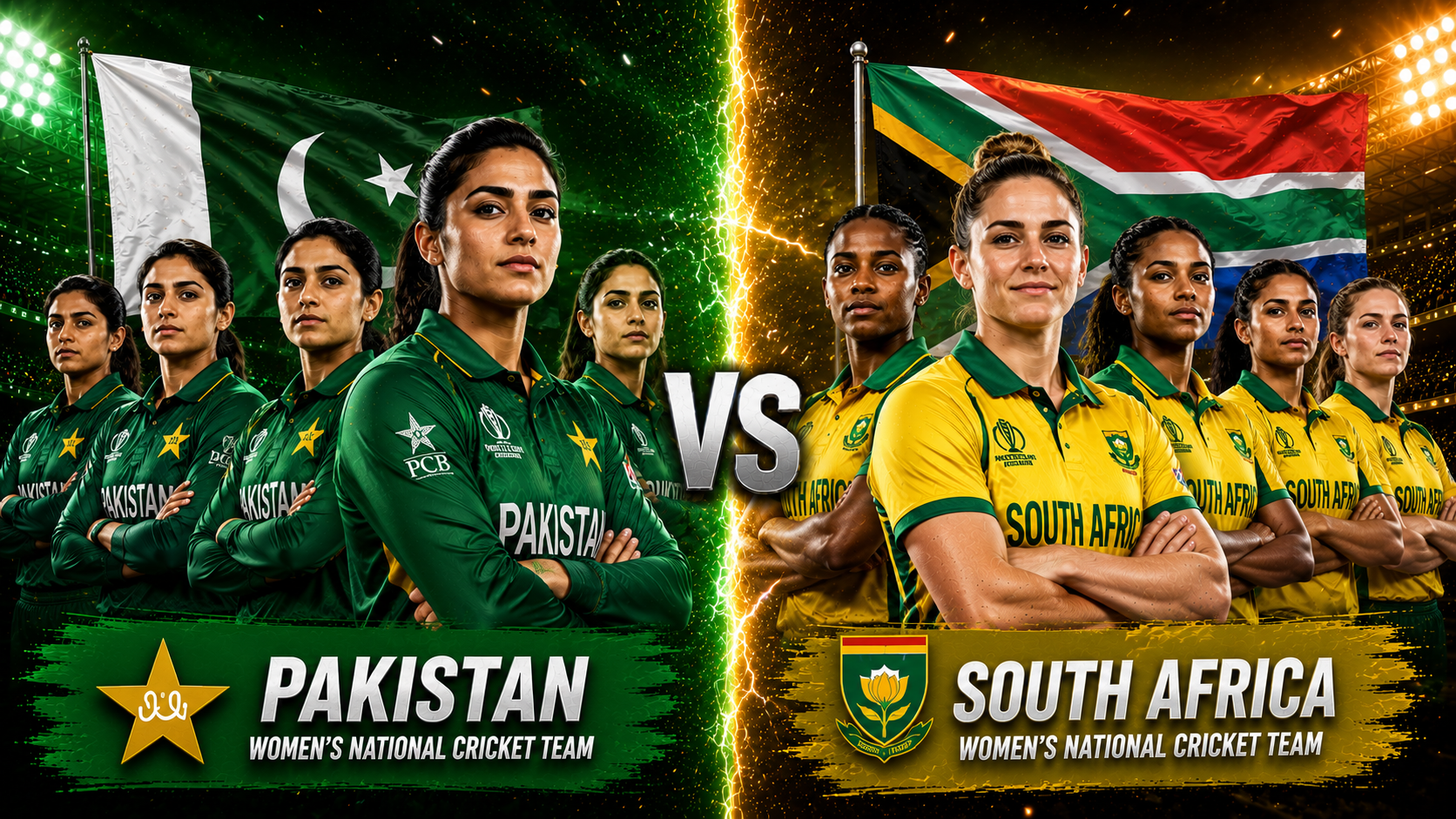
The competitive journey between these two women’s cricket sides reflects the evolution of modern international cricket. What began as uneven contests gradually transformed into a more balanced and tactically rich rivalry. Early matches highlighted differences in experience, structure, and consistency, but over time both teams developed stronger batting depth, sharper bowling variations, and improved fielding standards. Each encounter added new layers to the story, from pressure-driven collapses to match-winning partnerships. The rivalry now stands as a reflection of growth, resilience, and adaptation, where every scorecard tells a deeper story beyond numbers and results in women’s international cricket.
| Match | Date | Format | Venue | Winner | Score 1 | Score 2 |
|---|---|---|---|---|---|---|
| 1st T20I | 10 Feb 2026 | T20I | Potchefstroom | South Africa | PAK 180/9 | SA 185/5 |
| 2nd T20I | 13 Feb 2026 | T20I | Benoni | South Africa | PAK 100/9 | SA 104/4 |
| 3rd T20I | 16 Feb 2026 | T20I | Benoni | Pakistan | PAK 144/7 | SA 91/10 |
| 1st ODI | 22 Feb 2026 | ODI | Bloemfontein | South Africa | SA 260/6 | PAK 223/10 |
| 2nd ODI | 25 Feb 2026 | ODI | Centurion | South Africa | SA 361/8 | PAK 345/10 |
| 3rd ODI | 01 Mar 2026 | ODI | Durban | Pakistan | PAK 306/8 | SA 187/10 |
| WC Group | 21 Oct 2025 | ODI | Colombo | South Africa | SA 312/9 | PAK 83/7 |
| Statistic | WODI Matches | WT20I Matches | Total Matches | WODI Wins | WT20I Wins | Total Wins |
|---|---|---|---|---|---|---|
| South Africa | 34 | 22 | 56 | 25 | 14 | 39 |
| Pakistan | 34 | 22 | 56 | 7 | 8 | 15 |
| Tied | 0 | 0 | 0 | 0 | 0 | 0 |
| No Result | 2 | 0 | 2 | 2 | 0 | 2 |
| Highest Score | 361 | 185 | 361 | 361 | 185 | 361 |
| Lowest Score | 83 | 91 | 83 | 83 | 91 | 83 |
| Win Ratio | 73.5% | 63.6% | 69.6% | 73.5% | 63.6% | 69.6% |
| Player | Team | Matches | Innings | Runs | Highest Score | Strike Rate |
|---|---|---|---|---|---|---|
| Sadaf Shams | Pakistan | 3 | 3 | 165 | 97 | 118.25 |
| Fatima Sana | Pakistan | 6 | 6 | 182 | 60 | 146.34 |
| Annerie Dercksen | South Africa | 6 | 5 | 148 | 54 | 80.60 |
| Tazmin Brits | South Africa | 6 | 6 | 134 | 48 | 103.81 |
| Laura Wolvaardt | South Africa | 6 | 6 | 155 | 68 | 88.45 |
| Suné Luus | South Africa | 6 | 5 | 112 | 52 | 78.50 |
| Sidra Ameen | Pakistan | 4 | 4 | 98 | 41 | 64.06 |
| Player | Team | Matches | Overs | Wickets | Best Bowling | Economy |
|---|---|---|---|---|---|---|
| Sadia Iqbal | Pakistan | 6 | 42.0 | 9 | 3/41 | 4.10 |
| Suné Luus | South Africa | 6 | 31.0 | 7 | 3/42 | 4.67 |
| Ayabonga Khaka | South Africa | 5 | 24.0 | 6 | 2/22 | 3.07 |
| Nashra Sandhu | Pakistan | 6 | 38.2 | 6 | 2/25 | 4.69 |
| Marizanne Kapp | South Africa | 4 | 18.0 | 5 | 2/28 | 4.07 |
| Umme Hani | Pakistan | 4 | 22.0 | 4 | 2/35 | 5.00 |
| Nonkululeko Mlaba | South Africa | 6 | 36.0 | 5 | 2/56 | 5.60 |
The opening meetings between the two international sides set the tone for a developing competitive relationship in women’s cricket. At the start, one team carried more experience, stronger infrastructure, and greater exposure to high pressure matches, while the other was still building its identity on the global stage. Early games showed clear differences in consistency, especially in batting stability and death over execution. However, the emerging side showed promise through disciplined bowling spells and moments of resistance in the middle order. These early contests were not just about results but about learning patterns, understanding pressure, and adapting to international intensity. Over time, small improvements in fielding standards and strike rotation began to narrow the gap. Even in defeats, competitive passages of play hinted that the rivalry would grow more balanced in future encounters as both teams refined their strategies and player development systems.
| Match Type | Dominant Phase | Key Strength | Weakness Observed |
| Early ODI | Experienced side | Top order batting | Middle overs control |
| Early T20 | Emerging side bowling spell | Spin attack control | Finishing overs |
| Warm-up game | Balanced spells | Fielding effort | Batting collapse risk |
| Series opener | Tactical bowling | Powerplay discipline | Running between wickets |
As both sides began meeting in global ICC events, the matches gained more importance and intensity. Pressure situations in world tournaments exposed technical strengths and weaknesses more clearly than bilateral series. One side often relied on structured batting partnerships, while the other depended heavily on wicket-taking spells in crucial overs. These encounters highlighted how experience in knockout or group-stage pressure significantly influenced match outcomes. Over time, the competitive gap reduced as exposure and international match practice improved decision-making under pressure. Close finishes began to appear more frequently, especially in shorter formats where momentum shifts were rapid. Tactical awareness also improved, with teams adjusting bowling rotations and batting orders to counter specific threats. These global encounters played a key role in shaping the rivalry into a more unpredictable and competitive fixture rather than one-sided dominance.
| Tournament | Pressure Level | Batting Impact | Bowling Impact |
| World Cup | High | Stable partnerships | Early breakthroughs |
| T20 World Cup | Very High | Aggressive starts | Variation bowling |
| Qualifiers | Medium | Inconsistent scores | Spin dominance |
| League stage | High | Mixed results | Death overs control |
One of the most defining aspects of this rivalry has been the contrast between a bowling-focused approach and a batting-oriented strategy. The bowling-heavy side often relied on disciplined line and length, aiming to restrict scoring opportunities and force errors through sustained pressure. In contrast, the opposition built innings around structured partnerships and calculated acceleration in later overs. This tactical clash created interesting phases within matches where control constantly shifted. Spinners played a crucial role in slowing scoring rates, while batters looked to target weaker overs for momentum shifts. Field placements became increasingly aggressive, especially during middle overs when breaking partnerships was essential. The success of either side often depended on which strategy held firm under pressure, making tactical execution more important than raw talent alone. Over time, both teams adapted, adding variation in bowling and improving strike rotation in batting.
| Tactical Area | Team Approach | Execution Strength | Match Impact |
| Powerplay | Tight bowling | Moderate success | Early wickets |
| Middle overs | Spin control | High effectiveness | Run restriction |
| Death overs | Variation use | Mixed results | Final score impact |
| Batting plan | Partnership based | Stable structure | Chase control |
Across multiple series, momentum between the two sides shifted in phases rather than remaining constant. One team often established early dominance through stronger batting depth and fielding sharpness, especially in longer formats. During these periods, they consistently posted competitive totals and defended them effectively. However, the opposition responded with improved bowling spells and tighter game awareness, leading to phases where matches became far more balanced. These shifts were often triggered by standout performances in either batting collapses or unexpected bowling breakthroughs. The rivalry never remained static, and each cycle of dominance forced tactical adjustments from both sides. Fielding improvements and better handling of pressure overs gradually reduced one-sided results. As the rivalry matured, even dominant phases featured closer margins, reflecting the evolving competitiveness between the two teams.
| Phase | Dominant Side | Key Factor | Outcome Pattern |
| Early dominance | Experienced side | Batting depth | Large victories |
| Mid phase shift | Balanced | Bowling adaptation | Close finishes |
| Recent phase | Mixed | Tactical evolution | Unpredictable results |
| Current trend | Even | Skill parity | Tight contests |
Several matches in the rivalry history became turning points due to unexpected individual brilliance and tactical execution under pressure. In some games, lower-order batting contributions rescued teams from difficult positions, while in others, sudden bowling bursts dismantled strong starts. These breakthrough performances often came in critical tournament or series situations, changing the perception of predictability between the teams. Young players stepping up under pressure added new dimensions to the rivalry, showing that experience alone was not the deciding factor. Fielding moments, including run-outs and boundary saves, also played crucial roles in shifting match momentum. These turning points created belief within squads and altered future approaches to similar situations. As a result, later encounters became more cautious, with teams prioritizing stability in high-pressure overs.
| Match Situation | Turning Event | Impact Player Type | Result Change |
| Strong chase | Bowling collapse | Spin bowler | Match reversal |
| Defending low total | Top order failure | Seam bowler | Upset win |
| Balanced game | Middle order surge | Batter | Momentum shift |
| Tight finish | Fielding brilliance | All-rounder | Narrow victory |
Individual battles between key performers have consistently influenced match direction. Top-order batters often faced disciplined bowling attacks designed to limit scoring opportunities early in the innings. Similarly, strike bowlers targeted technical weaknesses, creating pressure situations that shaped innings progression. These head-to-head contests became defining features of many matches, with success often depending on who won these micro battles. Experienced players generally maintained consistency, but emerging talents occasionally produced game-changing performances. These matchups also added psychological pressure, as previous performances influenced future encounters. Over time, teams began preparing specifically for these individual contests, adjusting batting orders and bowling rotations accordingly. The rivalry therefore evolved beyond team performance into a collection of personal duels that shaped overall results.
| Player Battle Type | Strategy Used | Success Factor | Match Influence |
| Opener vs new ball | Swing attack | Early wicket | High |
| Middle order vs spin | Defensive play | Rotation control | Medium |
| Finisher vs death bowlers | Power hitting | Execution timing | High |
| Captain vs lead bowler | Tactical planning | Decision accuracy | Very High |
Looking at overall numbers, the rivalry shows a mixture of dominance phases and balanced modern competition. Early encounters favored one side more heavily, but recent matches indicate a narrowing gap in performance metrics. Batting averages, strike rates, and bowling economy figures reflect gradual improvement across both teams. The highest totals and lowest collapses highlight how conditions and pressure significantly impact outcomes. Bowling figures often stand out in low-scoring matches, while batting partnerships dominate high-scoring encounters. Fielding efficiency has also improved over time, reducing errors in crucial moments. Overall statistics reveal a rivalry that has evolved from one-sided contests into competitive encounters where small margins determine results. This statistical balance reflects the growing maturity of both teams in international women’s cricket.
| Category | Higher Performance | Lower Performance | Trend |
| Batting average | Team A earlier | Team B improving | Closing gap |
| Bowling economy | Team B spells | Team A variation | Balanced |
| Highest total | Team A peak | Team B chasing | Competitive |
| Fielding efficiency | Improved both | Early inconsistency | Rising standard |
This rivalry has grown into a meaningful chapter in women’s cricket history, shaped by shifting momentum, standout performances, and evolving strategies. From early one-sided results to closely fought modern contests, both teams have shown clear development in skill and mindset. Tactical awareness, player fitness, and exposure to global tournaments have played a major role in narrowing the gap. Today, matches between these sides are no longer predictable but competitive battles decided by small moments. The journey continues to inspire fans and players alike, highlighting how consistent growth can transform a fixture into a respected international rivalry.
1. What makes this rivalry competitive in women’s cricket?
The rivalry is competitive because both teams have contrasting strengths, with one focusing on disciplined bowling and the other on structured batting performances.
2. How has the performance trend changed over time?
Over time, the gap has reduced significantly as both teams improved their batting depth, bowling variations, and fielding standards.
3. Which format shows the closest contests?
T20 matches often produce the closest contests due to shorter game time and faster momentum shifts.
4. What role do bowlers play in this rivalry?
Bowlers play a crucial role by controlling run flow, taking early wickets, and creating pressure during middle overs.
5. Why is this rivalry important for women’s cricket?
It highlights the growth of international women’s cricket and shows how emerging teams can challenge established sides through consistent development.