Physical Address
304 North Cardinal St.
Dorchester Center, MA 02124
Physical Address
304 North Cardinal St.
Dorchester Center, MA 02124
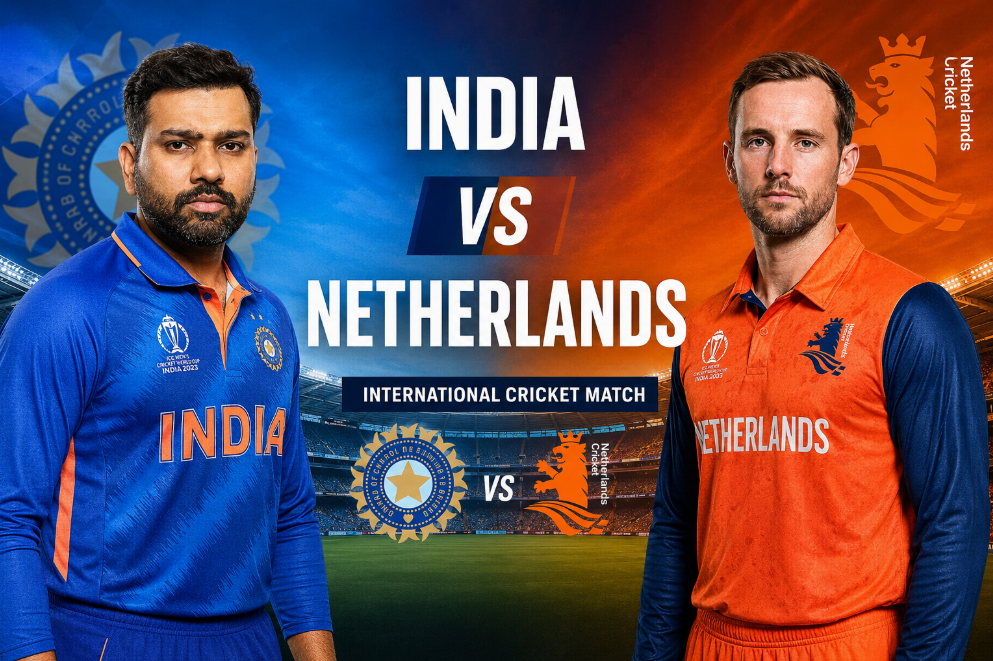
The rivalry between the India National Cricket Team and the Netherlands National Cricket Team may not be one of cricket’s most celebrated contests, but it offers an intriguing statistical story. Whenever these two sides have met on the international stage, the matches have reflected the contrast between a global cricket powerhouse and an ambitious emerging nation striving to compete with the elite. While India has dominated the results column, the Netherlands has produced moments of resilience, individual brilliance, and valuable lessons that have contributed to the growth of Associate cricket. Looking beyond the scorecards reveals a deeper narrative about development, consistency, and international cricket’s evolving landscape.
India and the Netherlands have met only a handful of times in official international cricket, primarily during ICC tournaments. Despite the limited sample size, these encounters have carried importance for both teams. For India, such matches have often served as opportunities to maintain momentum during major tournaments. For the Netherlands, facing one of cricket’s strongest teams has provided invaluable experience.
| Format | Matches | India Wins | Netherlands Wins | No Result |
|---|---|---|---|---|
| ODI | 3 | 3 | 0 | 0 |
| T20I | 1 | 1 | 0 | 0 |
| Total | 4 | 4 | 0 | 0 |
The numbers clearly show India’s complete dominance. However, statistics alone do not tell the entire story. Every meeting has allowed Dutch players to test themselves against world-class opponents. For India, these fixtures have demonstrated the team’s depth and ability to perform under tournament pressure.
The significance of this record lies less in competition balance and more in what it represents: the gap between Full Member and Associate nations and the opportunities global tournaments create for cricket’s expansion.
Each India-Netherlands match has taken place on a major ICC stage, adding importance beyond the result itself.
| Year | Tournament | Venue | Winner | Margin |
|---|---|---|---|---|
| 2003 | ICC Cricket World Cup | Paarl | India | 68 runs |
| 2011 | ICC Cricket World Cup | Delhi | India | 5 wickets |
| 2022 | ICC T20 World Cup | Sydney | India | 56 runs |
| 2023 | ICC Cricket World Cup | Bengaluru | India | 160 runs |
Looking at the timeline, a pattern emerges. The gap between the two teams has generally widened as India’s cricket system has become stronger and more sophisticated. The Netherlands, meanwhile, has improved as an Associate nation but has struggled to consistently match the depth available to India.
The 2023 World Cup encounter particularly highlighted India’s dominance, with contributions from both established stars and all-rounders who controlled every phase of the match.
Batting statistics reveal one of the biggest differences between the teams. India’s batting lineup has consistently featured players capable of converting starts into match-winning scores.
| Team | Highest Score | Average Runs Per Match | 100s | 50s |
|---|---|---|---|---|
| India | 410/4 | 287+ | 4 | 10+ |
| Netherlands | 250/9 | 175+ | 0 | 4 |
These numbers illustrate India’s ability to build large totals regardless of conditions. The presence of world-class batters across generations has enabled India to dominate scoring charts.
The Netherlands has shown flashes of quality but has often struggled to maintain partnerships against India’s bowling attack. Their lack of centuries against India reflects the challenge of converting promising starts into major innings.
Another notable trend is India’s scoring acceleration. Across multiple meetings, Indian batters have significantly increased their strike rates during middle and death overs, turning competitive totals into commanding ones.
Individual brilliance often defines cricket matches, and several Indian stars have left their mark on this fixture.
| Player | Team | Runs |
|---|---|---|
| Sachin Tendulkar | India | 79 |
| Rohit Sharma | India | 61 |
| Shreyas Iyer | India | 128 |
| KL Rahul | India | 102 |
| Wesley Barresi | Netherlands | 44 |
The table highlights the difference in batting resources available to each side. India has produced multiple match-defining innings, while the Netherlands has generally relied on smaller individual contributions.
Shreyas Iyer’s century during the 2023 World Cup stands out as one of the finest innings in the rivalry. It demonstrated India’s modern batting philosophy—aggressive yet controlled.
For the Netherlands, even modest contributions have often carried greater importance because they came against a world-class bowling attack.
Bowling has been another area where India has maintained a clear advantage.
| Player | Team | Wickets |
|---|---|---|
| Bhuvneshwar Kumar | India | 2 |
| Ravindra Jadeja | India | 2 |
| Mohammed Siraj | India | 2 |
| Tim Pringle | Netherlands | 1 |
| Paul van Meekeren | Netherlands | 1 |
Although the rivalry has featured relatively few matches, India’s bowlers have consistently controlled proceedings through disciplined lines and pressure-building spells.
The Netherlands bowlers have occasionally produced breakthroughs, but sustaining pressure across an entire innings has proven difficult. This reflects a broader challenge faced by Associate nations: maintaining quality depth throughout a bowling attack.
India’s success has often come through collective bowling performances rather than dependence on a single star performer.
Team totals offer another useful way to understand how these contests have unfolded.
| Team | Highest Total | Lowest Total |
|---|---|---|
| India | 410/4 | 204/5 |
| Netherlands | 250/9 | 136 |
The most striking figure is India’s record score of 410 runs, achieved during the 2023 World Cup. It showcased the team’s batting depth, with contributions from multiple players.
The Netherlands’ highest total of 250 represented a competitive effort but still fell well short of India’s benchmark performances.
These numbers highlight an important reality: the difference between the sides is not simply about winning and losing. It is about sustained excellence across all phases of the game.
The gap in scoring potential often determines the outcome before the second innings even begins.
Statistics become meaningful when attached to memorable performances. Several players have produced innings or spells that remain central to the India-Netherlands story.
Sachin Tendulkar’s World Cup Influence
In the early meetings, Sachin Tendulkar provided stability and experience. His contributions ensured India maintained control against a spirited Dutch side eager to make an impression.
Shreyas Iyer’s Bengaluru Masterclass
The century scored in the 2023 World Cup was one of the most dominant batting displays in the fixture. It combined power, timing, and tactical awareness.
KL Rahul’s Aggressive Hundred
Rahul’s century further demonstrated India’s batting depth and ability to accelerate rapidly against quality opposition.
These performances matter because they represent the evolution of Indian cricket across different eras.
A broader statistical comparison provides deeper insight.
| Metric | India | Netherlands |
|---|---|---|
| Win Percentage | 100% | 0% |
| Average Team Score | 287+ | 175+ |
| Centuries | 4 | 0 |
| Highest Score | 410/4 | 250/9 |
| Average Wickets Taken | 8+ | 4+ |
The comparison reinforces India’s superiority across every major category.
However, the Netherlands’ achievements should not be dismissed. Merely qualifying for major ICC events and competing against elite nations is an accomplishment that reflects decades of cricket development.
These metrics also demonstrate why global cricket remains challenging for emerging nations despite significant progress.
The raw numbers suggest complete Indian dominance, but a deeper analysis uncovers more interesting themes.
First, India’s victories have become increasingly comprehensive over time. This reflects not only talent but also the strength of India’s domestic system, player development pathways, and tactical sophistication.
Second, the Netherlands has gradually become more competitive against international opposition overall, even if the results against India have remained one-sided. Their qualification for multiple ICC events demonstrates consistent growth.
Third, India’s success has rarely depended on one player. Different batters and bowlers have contributed across different matches, highlighting extraordinary squad depth.
Perhaps the most revealing trend is that the gap between the two teams often becomes most visible during middle overs, where India’s experience, fitness, and tactical awareness create sustained pressure.
The statistics ultimately tell a story of cricket’s hierarchy but also of its expansion. Every India-Netherlands meeting provides exposure, learning opportunities, and inspiration for emerging cricket nations.
Beyond statistics, these matches symbolize cricket’s global ambitions. India represents one of the sport’s strongest ecosystems, while the Netherlands showcases what determination and development can achieve outside traditional cricket powerhouses.
The encounters help Associate nations gain exposure, attract funding, and inspire future generations. For India, they reinforce the responsibility of supporting cricket’s growth worldwide.
As the sport expands into new regions, fixtures like India versus Netherlands may become increasingly important in shaping cricket’s future.
The statistical record between India and the Netherlands is undeniably one-sided, with India maintaining a perfect winning record across all formats. Yet reducing the rivalry to wins and losses would overlook its broader significance. These encounters tell a story about cricket’s evolution, the challenges faced by emerging nations, and the standards required to compete at the highest level. India’s dominance reflects its exceptional depth, infrastructure, and talent pipeline, while the Netherlands’ participation highlights the growing reach of international cricket. As future ICC tournaments create new opportunities for these teams to meet, the statistics will continue evolving, adding fresh chapters to a unique and meaningful cricketing relationship.
How many times have India and the Netherlands played against each other in international cricket?
India and the Netherlands have met four times in official international cricket across ODI and T20I formats. All encounters have taken place during ICC tournaments, making each match particularly significant. India has won every meeting so far. Although the rivalry lacks the frequency of traditional cricket contests, each match provides valuable experience for Dutch players and an opportunity for India to showcase its depth. The limited number of games makes every statistical comparison interesting because even small performances can have a noticeable impact on overall records.
What is India’s biggest win against the Netherlands?
India’s most dominant victory came during the 2023 ICC Cricket World Cup in Bengaluru, where they defeated the Netherlands by 160 runs. India posted a massive total exceeding 400 runs, driven by multiple batting contributions. The Dutch side struggled to keep pace with the required run rate and eventually fell well short of the target. The match highlighted India’s batting depth and bowling strength while also demonstrating the gap that still exists between established Full Member nations and developing cricket teams on the world stage.
Who has scored the most memorable innings in India vs Netherlands matches?
Several innings stand out, but Shreyas Iyer’s century in the 2023 World Cup ranks among the most memorable. His aggressive yet controlled batting helped India reach one of the highest totals recorded in the rivalry. Earlier generations also contributed notable performances, including valuable innings from Sachin Tendulkar. What makes these knocks memorable is not just the number of runs scored but the way they influenced the match. They demonstrated India’s ability to dominate major tournaments through high-quality batting performances under pressure.
Why are India vs Netherlands matches important despite the one-sided record?
These matches play an important role in the global development of cricket. For the Netherlands, competing against a leading cricket nation offers experience that cannot be replicated elsewhere. Players gain exposure to elite standards, high-pressure environments, and world-class opponents. For India, such matches support cricket’s expansion and provide opportunities to test squad depth. The contests also attract global attention, helping Associate nations increase visibility. Their significance extends far beyond the final score because they contribute to the broader growth of international cricket.
What batting trends are visible in the rivalry statistics?
The most noticeable trend is India’s ability to build large partnerships and accelerate scoring during the middle and final overs. Indian batters consistently maintain higher averages, strike rates, and boundary percentages than their Dutch counterparts. The Netherlands has often shown resilience in the early stages of innings but struggled to sustain momentum against India’s bowling attack. Another trend is India’s tendency to produce multiple significant contributions within the same innings rather than relying on a single batter, reflecting the remarkable depth of their batting lineup.
What does the future hold for this cricket rivalry?
Future meetings will likely occur during ICC events such as World Cups and global qualification tournaments. While India remains the stronger side, the Netherlands continues to improve through increased international exposure and domestic development programs. As Associate cricket grows, the competitive gap may gradually narrow. Future encounters could become more closely contested, particularly in shorter formats where momentum shifts quickly. Regardless of results, every India-Netherlands match contributes to cricket’s international expansion and provides valuable statistical chapters for analysts and fans to study.