Physical Address
304 North Cardinal St.
Dorchester Center, MA 02124
Physical Address
304 North Cardinal St.
Dorchester Center, MA 02124
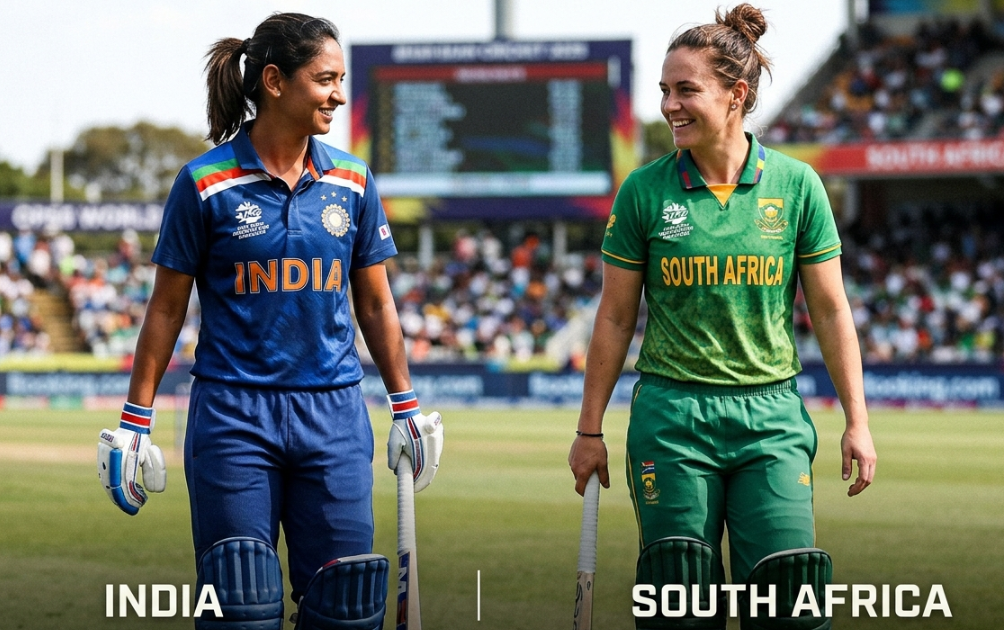
The India Women’s National Cricket Team and the South Africa Women’s National Cricket Team produced a memorable contest in the ICC Women’s Cricket World Cup 2025 Final at the Dr. DY Patil Sports Academy in Navi Mumbai. With a historic world title on the line, both teams entered the final carrying immense expectations. India delivered a composed batting performance to post a formidable total before their bowlers completed the job with a disciplined display. The match ultimately ended with India securing a 52-run victory, claiming their first-ever ICC Women’s Cricket World Cup title in a landmark moment for women’s cricket history.
The final showcased two of the strongest teams in women’s cricket. South Africa won the toss and elected to field first, hoping to exploit early conditions. India responded with an impressive batting display, scoring 298/7 in 50 overs. South Africa fought bravely during the chase but were eventually bowled out for 246 in 45.3 overs, handing India a famous 52-run victory.
Match Summary
| Match Details | Information |
| Match | India Women vs South Africa Women |
| Tournament | ICC Women’s Cricket World Cup 2025 Final |
| Venue | Dr. DY Patil Sports Academy, Navi Mumbai |
| Toss | South Africa Women won and elected to field |
| India Women | 298/7 (50 overs) |
| South Africa Women | 246 all out (45.3 overs) |
| Result | India Women won by 52 runs |
| Player of the Match | Shafali Verma |
This summary reflects the overall flow of the final. India capitalized on batting first by building several productive partnerships and maintaining scoring momentum throughout the innings. South Africa’s chase remained alive for long periods, particularly due to a magnificent innings from captain Laura Wolvaardt, but the required rate kept climbing. India’s bowlers consistently struck at important moments, preventing South Africa from developing sustained momentum and eventually sealing a historic triumph.
Winning the toss in a major final often carries enormous significance. South Africa’s decision to bowl first was based on the expectation that early movement and scoreboard pressure during a chase could work in their favor. Initially, the choice appeared reasonable as South Africa maintained discipline with the new ball.
However, India’s top order adapted effectively to the conditions. Once the opening partnership settled, the batters rotated strike well and punished loose deliveries. By the halfway stage of the innings, India had already established a strong platform. The decision to field first ultimately backfired as India’s total approached the 300-run mark, creating scoreboard pressure that influenced the chase from the beginning.
India’s batting effort combined aggression and composure. The top order ensured a solid start before the middle order accelerated during the latter stages.
India Women Batting Scorecard
| Batter | Runs | Balls | 4s | 6s |
| Smriti Mandhana | 45 | 58 | 8 | 0 |
| Shafali Verma | 87 | 78 | 7 | 2 |
| Jemimah Rodrigues | 24 | 37 | 1 | 0 |
| Harmanpreet Kaur | 20 | 29 | 2 | 0 |
| Deepti Sharma | 58 | 58 | 3 | 1 |
| Amanjot Kaur | 12 | 14 | 1 | 0 |
| Richa Ghosh | 34 | 24 | 3 | 2 |
| Radha Yadav | 3* | 3 | 0 | 0 |
| Extras | 15 | – | – | – |
| Total | 298/7 | 50 Overs | – | – |
India’s innings was built around three outstanding contributions. Shafali Verma’s attacking 87 gave India control of the middle overs. Deepti Sharma’s all-round maturity was evident in her composed 58, while Richa Ghosh’s late acceleration ensured India finished strongly. Smriti Mandhana’s fluent 45 also laid a solid foundation.
A score close to 300 in a World Cup final represented both skill and game awareness. India never allowed South Africa to dominate for an extended period and continually rebuilt after wickets.
South Africa Bowling Figures
| Bowler | Overs | Runs | Wickets | Economy |
| Marizanne Kapp | 10 | 59 | 0 | 5.90 |
| Ayabonga Khaka | 9 | 58 | 3 | 6.44 |
| Nonkululeko Mlaba | 10 | 47 | 1 | 4.70 |
| Nadine de Klerk | 9 | 52 | 1 | 5.78 |
| Sune Luus | 5 | 34 | 0 | 6.80 |
| Chloe Tryon | 7 | 46 | 1 | 6.57 |
Ayabonga Khaka was South Africa’s most successful bowler with three wickets. Nonkululeko Mlaba also maintained control through the middle overs. Nevertheless, South Africa struggled to stop India’s scoring rate during crucial phases. The inability to break partnerships quickly allowed India to maintain momentum and reach a match-winning total.
South Africa’s chase began with intent. The batters understood that nearly six runs per over was required from the outset. While wickets fell periodically, captain Laura Wolvaardt played one of the finest innings seen in a Women’s World Cup final.
Despite her century, South Africa lacked enough support from the middle order. India kept taking wickets at critical stages, ensuring the required run rate remained beyond reach.
South Africa Key Batting Contributions
| Batter | Runs |
| Laura Wolvaardt | 101 |
| Other Batters Combined | 145 |
| Team Total | 246 |
Wolvaardt’s century was extraordinary under pressure. She carried South Africa’s hopes deep into the chase and demonstrated exceptional shot selection. However, finals are often decided by collective contributions. While Wolvaardt excelled individually, India’s bowlers repeatedly dismissed her partners, preventing the development of game-changing partnerships.
India Bowling Performance
| Bowler | Impact |
| Deepti Sharma | Match-winning spell, five wickets |
| Renuka Singh | Early pressure |
| Radha Yadav | Controlled middle overs |
| Supporting Bowlers | Regular breakthroughs |
India’s bowling attack complemented the batting performance perfectly. Deepti Sharma delivered the decisive spell, claiming five wickets and dismantling South Africa’s middle and lower order. Her ability to vary pace and maintain accuracy under pressure proved crucial. The supporting bowlers contributed by creating pressure from the opposite end, forcing risky strokes from South African batters.
Important Partnerships
| Partnership | Runs | Significance |
| Mandhana – Shafali | Strong opening stand | Early platform |
| Shafali – Jemimah | Stabilized innings | Maintained momentum |
| Deepti – Richa | Late acceleration | Boosted total |
| Wolvaardt Partnership(s) | Kept chase alive | South Africa’s hope |
Partnerships often determine the outcome of finals more than individual performances. India’s batting partnerships ensured there was no major collapse. Every productive stand pushed the total higher and increased pressure on South Africa.
For South Africa, Wolvaardt’s partnerships briefly threatened India’s control. However, none developed into a match-defining stand. India’s ability to break partnerships proved one of the most significant factors behind the victory.
Top Performers
| Player | Team | Performance |
| Shafali Verma | India | 87 runs |
| Deepti Sharma | India | 58 runs and 5 wickets |
| Laura Wolvaardt | South Africa | 101 runs |
| Richa Ghosh | India | 34 off 24 |
| Ayabonga Khaka | South Africa | 3 wickets |
These players shaped the contest through decisive contributions. Shafali’s aggressive batting established India’s dominance, while Deepti influenced both innings. Wolvaardt fought brilliantly despite ending on the losing side. Richa’s finishing contribution ensured India exceeded what might have been merely a competitive total.
India’s victory stemmed from several interconnected factors:
India consistently controlled momentum during key periods. Even when South Africa threatened through Wolvaardt’s century, India retained composure and executed their plans effectively.
1. Shafali Verma’s Counterattacking 87
Her innings prevented South Africa from gaining early control and established the platform for a big total.
2. Deepti Sharma’s Half-Century
At a stage where India required consolidation, Deepti ensured the innings remained balanced and productive.
3. Richa Ghosh’s Late Assault
Her aggressive stroke play during the final overs pushed India close to the 300-run mark.
4. Early Breakthroughs in the Chase
India’s bowlers prevented South Africa from enjoying a smooth start.
5. Deepti Sharma’s Five-Wicket Haul
The all-rounder dismantled South Africa’s middle order and removed any realistic chance of a successful chase.
6. Dismissal of Key Partners Around Wolvaardt
Each wicket increased pressure on the South African captain and reduced support around her.
These moments collectively shaped the outcome and gradually shifted the contest in India’s favor.
Key Statistics From The Match
| Statistic | India | South Africa |
| Total Runs | 298 | 246 |
| Boundaries by Top Scorer | Shafali 7 fours, 2 sixes | Wolvaardt century |
| Highest Wicket Taker | Deepti Sharma (5) | Khaka (3) |
| Margin | Won by 52 runs | Lost by 52 runs |
The statistics underline India’s superiority in the decisive moments. The batting unit produced multiple substantial contributions, while the bowling unit delivered the tournament’s most important defensive performance. South Africa’s reliance on Wolvaardt became increasingly apparent as the innings progressed.
India Women defeated South Africa Women by 52 runs to win the ICC Women’s Cricket World Cup 2025. The victory represented India’s first Women’s World Cup title and marked one of the most significant achievements in the history of Indian women’s cricket. The triumph rewarded years of progress, investment, and development within the women’s game. It also elevated a generation of players led by Harmanpreet Kaur into cricketing history. For South Africa, the defeat was painful, but their campaign demonstrated the team’s growth and ability to compete consistently at the highest level.
What was the result of the India Women vs South Africa Women World Cup final?
India Women defeated South Africa Women by 52 runs in the ICC Women’s Cricket World Cup 2025 Final. India scored 298/7 in 50 overs before bowling South Africa out for 246 in 45.3 overs. The victory secured India’s first Women’s World Cup title and became one of the most historic moments in the country’s women’s cricket journey. The win reflected strong performances from both the batting and bowling units and highlighted India’s ability to handle pressure in a major tournament final.
Who was the Player of the Match in the final?
Shafali Verma was named Player of the Match for her brilliant innings of 87 runs from 78 deliveries. She played a crucial role in building India’s total and consistently attacked the South African bowling attack. Her innings featured a blend of controlled aggression and intelligent shot selection. The knock gave India momentum during the middle overs and established the foundation for the eventual winning total of 298.
How many runs did Laura Wolvaardt score?
Laura Wolvaardt scored a magnificent 101 runs for South Africa in the final. Her century kept South Africa competitive despite regular wickets falling at the other end. She demonstrated excellent temperament and leadership throughout the chase. However, the lack of substantial support from other batters meant her effort ultimately ended in a losing cause. Even so, it remains one of the finest innings played in a Women’s World Cup final.
How important was Deepti Sharma’s performance?
Deepti Sharma produced one of the defining all-round performances in a World Cup final. She scored 58 valuable runs with the bat and later claimed five wickets during South Africa’s chase. Her batting stabilized India’s innings after key wickets, while her bowling dismantled South Africa’s hopes of a successful pursuit. Few players have influenced a major final so comprehensively in both disciplines. Her contribution was central to India’s championship-winning performance.
Why was India’s total of 298 so significant?
A total of 298 in a World Cup final placed immediate pressure on South Africa. Finals often create additional psychological challenges for chasing teams, and India ensured the target remained demanding throughout. Contributions from Shafali Verma, Deepti Sharma, Smriti Mandhana, and Richa Ghosh helped India sustain momentum across all phases of the innings. The scoreboard pressure forced South Africa to take risks, creating wicket-taking opportunities for India’s bowlers later in the chase.
What does this victory mean for Indian women’s cricket?
The World Cup triumph represents a landmark achievement for Indian women’s cricket. It validated years of investment, grassroots development, and international competitiveness. Winning a global ICC tournament enhanced the visibility of the women’s game and inspired future generations of cricketers across the country. The success also established this Indian team as one of the most influential groups in the history of the sport, with their achievements likely to have a lasting impact on women’s cricket worldwide.