Physical Address
304 North Cardinal St.
Dorchester Center, MA 02124
Physical Address
304 North Cardinal St.
Dorchester Center, MA 02124
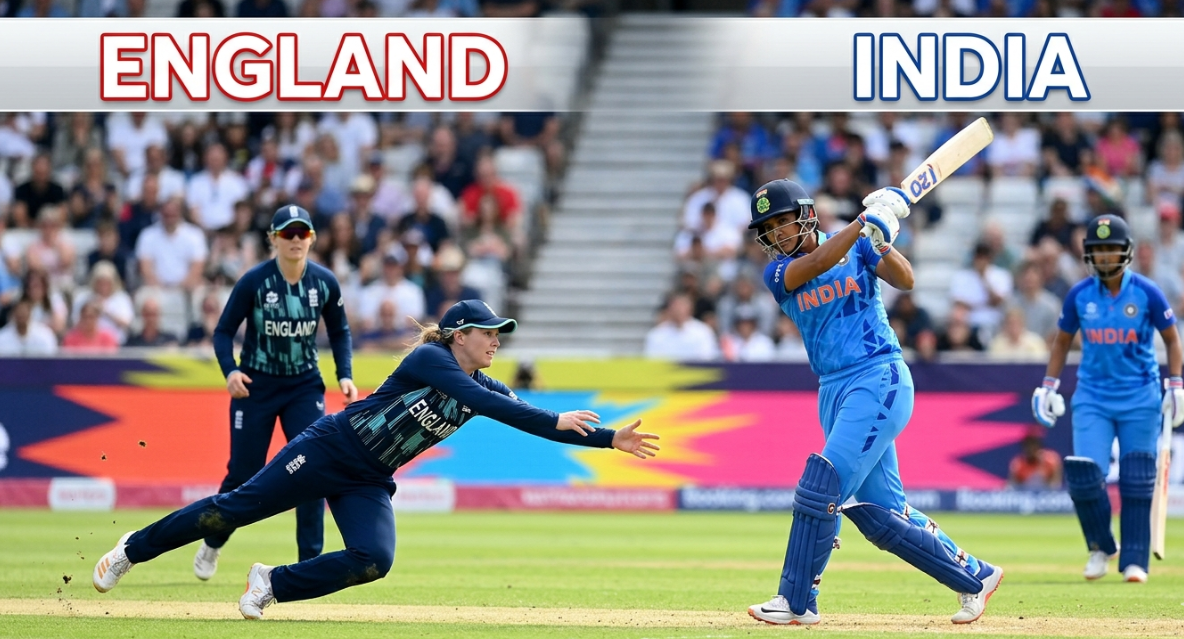
Cricket rivalries in the women’s game have grown significantly over the last decade, and contests between England Women and India Women now attract global attention. Their meetings regularly feature world-class players, high-pressure situations, and memorable performances that influence rankings, confidence, and tournament preparation. One of the most significant recent encounters came during the 3rd ODI of India Women’s tour of England in July 2025, where both sides produced a thrilling contest filled with centuries, partnerships, wickets, and dramatic momentum swings. This complete scorecard analysis examines every important aspect of the match, including batting performances, bowling figures, partnerships, key moments, and the result.
The third ODI between England Women and India Women was played at Chester-le-Street on 22 July 2025. It turned into one of the most entertaining women’s one-day internationals of the year. India posted a formidable total before England launched a determined chase that kept the outcome uncertain until the closing overs.
India eventually secured a 13-run victory, winning the ODI series 2-1 and ending the tour on a high note.
Match Summary
| Match Details | Information |
| Match | England Women vs India Women, 3rd ODI |
| Date | 22 July 2025 |
| Venue | Chester-le-Street |
| Result | India Women won by 13 runs |
| India Women | 318/5 (50 overs) |
| England Women | 305 all out (49.5 overs) |
| Player of the Match | Harmanpreet Kaur |
| Series Result | India won ODI series 2-1 |
This summary reflects how closely contested the match was despite India posting more than 300 runs. England remained in the chase for most of their innings, largely due to a remarkable partnership in the middle order. However, India’s bowlers held their nerve during the crucial stages and prevented England from completing what would have been a record chase. The result carried additional significance because it handed India an overseas ODI series victory against one of the strongest teams in women’s cricket.
India won an important phase of the match before a ball was bowled by making effective use of batting-friendly conditions. The surface looked ideal for stroke play, and their batters took advantage throughout the innings.
England’s bowlers found occasional breakthroughs but struggled to control scoring rates once the Indian middle order settled. The decision-making during the middle overs became a defining factor as India accelerated aggressively after building a stable foundation.
India’s batting effort combined stability with controlled aggression. Contributions arrived throughout the lineup, but captain Harmanpreet Kaur’s century transformed a good innings into an exceptional one.
India Women Batting Scorecard
| Batter | Runs | Balls | 4s | 6s | SR |
| Pratika Rawal | 26 | 33 | 2 | 0 | 78.79 |
| Smriti Mandhana | 45 | 54 | 5 | 0 | 83.33 |
| Harleen Deol | 45 | 65 | 4 | 0 | 69.23 |
| Harmanpreet Kaur | 102 | 84 | 14 | 0 | 121.43 |
| Jemimah Rodrigues | 50 | 45 | 7 | 0 | 111.11 |
India’s innings showcased the value of partnerships. The top order ensured a solid start without taking unnecessary risks. Mandhana and Harleen Deol absorbed pressure and rotated strike effectively. Once Harmanpreet Kaur arrived at the crease, the innings shifted gears dramatically.
Her 102 from just 84 deliveries was the defining batting performance of the match. The captain consistently found boundaries and forced England’s bowlers to alter their plans. Jemimah Rodrigues complemented her perfectly with a fluent half-century. Together they transformed a competitive total into a match-winning score.
| Bowler | Overs | Runs | Wickets |
| Sophie Ecclestone | 10 | 58 | 1 |
| Lauren Bell | 10 | 63 | 2 |
| Lauren Filer | 10 | 64 | 1 |
| Charlie Dean | 10 | 58 | 1 |
| Linsey Smith | 10 | 54 | 1 |
England’s bowling figures reveal the challenge they faced. No bowler managed to consistently slow India’s scoring rate during the final 20 overs. Lauren Bell claimed two wickets and remained England’s most successful wicket-taker, but the attack lacked sustained control.
The inability to break partnerships proved costly. Harmanpreet and Rodrigues repeatedly found gaps, turning singles into twos and punishing loose deliveries. By the final overs, England were largely focused on limiting damage rather than attacking for wickets.
Chasing 319 required a record-breaking effort. England suffered an early setback but recovered impressively through their middle order.
For a significant portion of the chase, England appeared capable of pulling off a remarkable victory.
England Women Batting Scorecard
| Batter | Runs | Balls |
| Emma Lamb | 68 | 81 |
| Nat Sciver-Brunt | 98 | 105 |
| Sophia Dunkley | 29 | 28 |
| Amy Jones | 20 | 23 |
| Others | 90 | – |
| Total | 305 All Out | 49.5 Overs |
England’s innings was built around the brilliance of Nat Sciver-Brunt. Her 98-run knock almost produced one of the great ODI chases. Emma Lamb provided outstanding support, and together they repaired the innings after early wickets.
The chase remained alive deep into the final overs because both batters rotated strike efficiently while also finding boundaries at crucial moments. Yet cricket often turns on small margins, and Sciver-Brunt falling short of a century also marked the point where England’s hopes began to fade.
India Women Bowling Scorecard
| Bowler | Overs | Runs | Wickets |
| Kranti Goud | 9.5 | 52 | 6 |
| Deepti Sharma | 10 | 48 | 1 |
| Sneh Rana | 10 | 61 | 1 |
| Amanjot Kaur | 8 | 42 | 1 |
| Others | – | – | 1 |
Kranti Goud delivered a spell that will be remembered for years. Her remarkable six-wicket haul dismantled England’s lower order and shifted the match decisively in India’s favor.
Even when Sciver-Brunt and Lamb dominated the middle overs, India remained in the contest because Goud consistently threatened with the ball. Her ability to strike at key moments ultimately proved decisive.
Important Partnerships
| Partnership | Runs |
| Harmanpreet Kaur – Jemimah Rodrigues | 90+ |
| Nat Sciver-Brunt – Emma Lamb | 162 |
| Mandhana – Harleen Deol | Significant foundation stand |
Partnerships defined this match. India’s middle-order alliance between Harmanpreet and Rodrigues generated the acceleration needed for a 300-plus total.
England responded through Sciver-Brunt and Lamb. Their 162-run stand transformed a difficult chase into a genuine possibility. For nearly 25 overs, they controlled the contest and forced India onto the defensive. The dismissal of one partner immediately altered the momentum and exposed England’s lower order to pressure.
Top Performers
| Player | Performance |
| Harmanpreet Kaur | 102 (84) |
| Kranti Goud | 6/52 |
| Nat Sciver-Brunt | 98 |
| Emma Lamb | 68 |
| Jemimah Rodrigues | 50 |
This table highlights the individuals who shaped the outcome. Harmanpreet’s century established India’s advantage. Kranti Goud then converted that advantage into victory through her outstanding bowling performance.
For England, Sciver-Brunt and Lamb nearly engineered a famous chase. Their efforts deserved victory but ultimately fell short against India’s disciplined finishing.
India won because they executed critical phases more effectively than England.
The first factor was batting acceleration. Harmanpreet Kaur recognized the ideal moment to attack and dramatically increased the scoring rate. England had controlled portions of the innings, but India’s middle order prevented them from dominating.
The second factor was wicket-taking ability. While England relied heavily on containing runs, India’s bowlers focused on creating dismissal opportunities. Kranti Goud’s aggressive approach generated breakthroughs even when England appeared comfortable.
Another decisive element was pressure management. During the Sciver-Brunt–Lamb partnership, India could easily have lost confidence. Instead, they remained patient, maintained attacking fields, and waited for opportunities.
Finally, India’s lower-order bowling execution was superior. England needed composure during the final overs but lost wickets at regular intervals. India’s bowlers consistently hit disciplined lengths and forced mistakes.
Key Statistics From The Match
| Statistic | Value |
| Highest Individual Score | Harmanpreet Kaur – 102 |
| Best Bowling Figures | Kranti Goud – 6/52 |
| Highest Partnership | Sciver-Brunt & Lamb – 162 |
| Team Total (India) | 318/5 |
| Team Total (England) | 305 |
| Margin of Victory | 13 Runs |
These numbers summarize the contest effectively. The century, the six-wicket haul, and the massive partnership all indicate how competitive the match was. It was not a one-sided result but rather a high-quality battle between two elite teams.
India Women defeated England Women by 13 runs after posting 318/5 and restricting England to 305. The victory secured a 2-1 ODI series triumph and reinforced India’s reputation as one of the strongest teams in women’s international cricket.
Beyond the scoreline, the match demonstrated India’s growing depth. Harmanpreet Kaur delivered leadership through runs, while Kranti Goud emerged as a match-winning bowling force. England showed resilience and fighting spirit but were unable to complete one of the highest successful chases in women’s ODI cricket.
The contest provided everything cricket supporters expect from a premier international fixture: centuries, partnerships, tactical battles, dramatic swings in momentum, and a thrilling finish. It remains one of the standout matches in recent meetings between England Women and India Women.
What was the result of the England Women vs India Women match?
India Women won the third ODI by 13 runs after scoring 318/5 and bowling England out for 305. The match remained competitive throughout, particularly during England’s chase when Nat Sciver-Brunt and Emma Lamb built a huge partnership. However, India’s bowlers regained control in the closing stages and defended their total successfully. The victory also secured a 2-1 ODI series win for India, making it one of the team’s most significant overseas achievements in recent years.
Who was the Player of the Match in England Women vs India Women?
Harmanpreet Kaur was named Player of the Match for her magnificent century. The Indian captain scored 102 runs from 84 balls and completely changed the momentum of the innings. Her aggressive stroke play ensured India crossed the 300-run mark, which eventually became the difference between the two sides. The innings combined leadership, composure, and attacking intent, making it one of the standout knocks of the tour.
Who scored the most runs in the match?
Harmanpreet Kaur finished as the highest scorer with 102 runs. For England, Nat Sciver-Brunt came extremely close to matching her impact with a brilliant 98. Both innings were played under pressure and showcased world-class batting. While Harmanpreet’s century gave India a commanding total, Sciver-Brunt’s effort nearly produced a remarkable chase. The difference between the two performances was that Harmanpreet’s team finished on the winning side.
Which bowler had the biggest impact on the result?
Kranti Goud had the most significant impact with the ball, taking 6 wickets for 52 runs. Her spell disrupted England’s chase at critical moments and prevented the hosts from building on their strong middle-order partnership. Every time England appeared to gain control, Goud produced a breakthrough. Her six-wicket haul ranks among the finest bowling performances by an Indian women’s cricketer in ODI cricket and played a decisive role in the victory.
What was the most important partnership of the match?
England’s 162-run partnership between Nat Sciver-Brunt and Emma Lamb was the biggest stand of the game. It rescued the chase after early setbacks and shifted pressure onto India. For much of the innings, England appeared capable of reaching the target because of this partnership. However, once the stand was broken, wickets fell more frequently. The partnership remains one of the defining moments of the contest despite ending in defeat.
Why was this match important for India Women?
The victory was significant because it secured a series win in England against one of the strongest teams in world cricket. Winning overseas has always been a major benchmark for international sides, and India’s success highlighted the team’s growing maturity and depth. The performances of Harmanpreet Kaur, Jemimah Rodrigues, and Kranti Goud also provided confidence ahead of future international tournaments. The match demonstrated India’s ability to win under pressure and compete consistently against elite opposition.