Physical Address
304 North Cardinal St.
Dorchester Center, MA 02124
Physical Address
304 North Cardinal St.
Dorchester Center, MA 02124
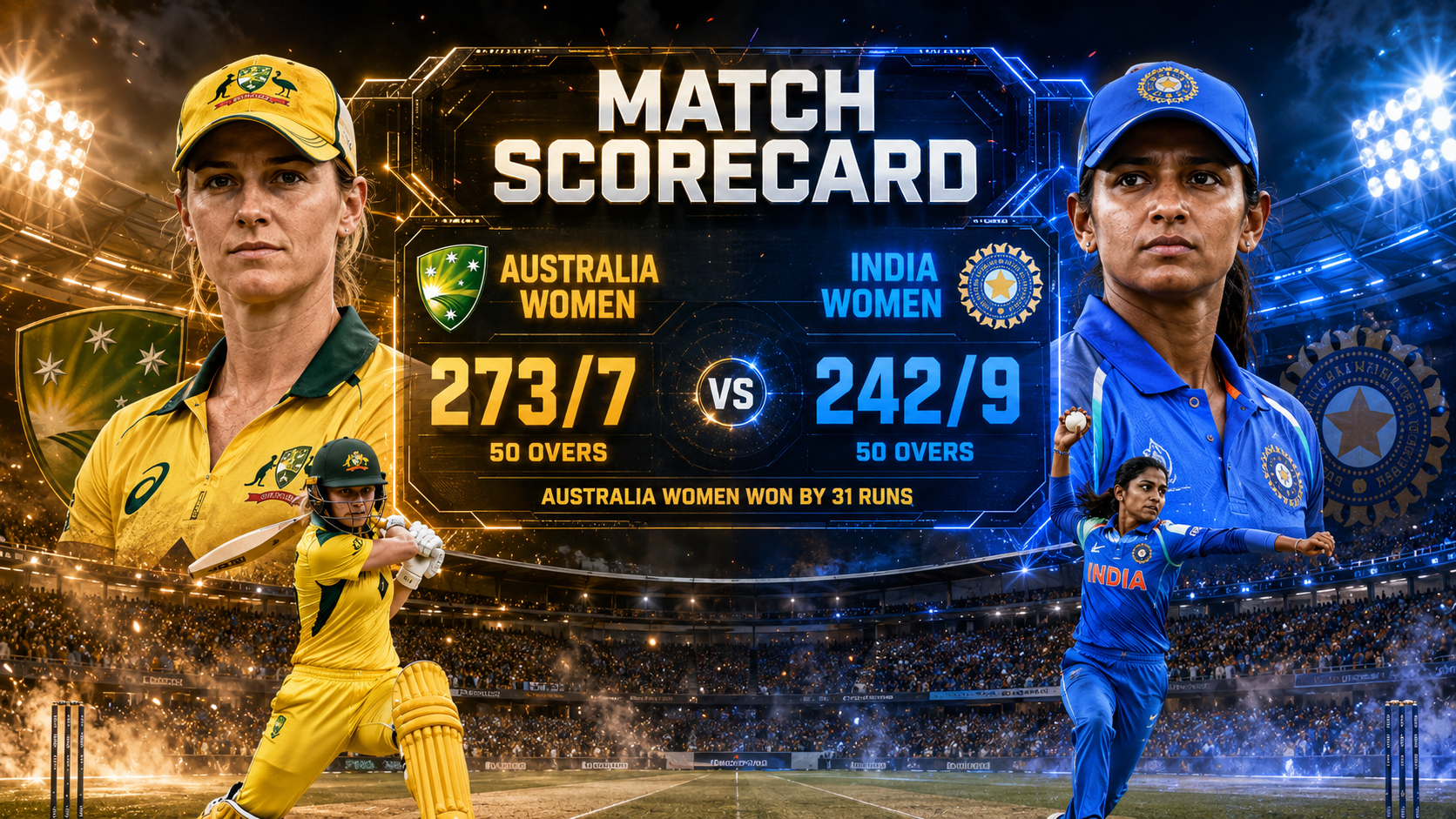
The rivalry between Australia Women and India Women has become one of the most fascinating stories in international cricket. What began as a contest between an established powerhouse and a developing side has evolved into a highly competitive battle filled with memorable performances, dramatic finishes, and record-breaking achievements. Over the years, both teams have produced world-class players who have shaped the direction of women’s cricket. From major tournament clashes to thrilling bilateral series, every encounter has added a new chapter to their shared history. Their meetings continue to attract global attention and showcase the growth, skill, and excitement of the modern women’s game.
| Match Type | Date | Venue | Winner | Margin | First Innings | Second Innings |
| Standalone Test | Mar 5-8, 2026 | WACA, Perth | Australia | 10 wickets | IND: 198 | AUS: 323 |
| 3rd ODI | Mar 3, 2026 | WACA, Perth | Australia | 6 wickets | IND: 212 | AUS: 215/4 |
| 2nd ODI | Mar 1, 2026 | WACA, Perth | India | 4 runs | IND: 245 | AUS: 241 |
| 1st ODI | Feb 27, 2026 | WACA, Perth | Australia | 7 wickets | IND: 180 | AUS: 184/3 |
| 3rd T20I | Feb 22, 2026 | Adelaide Oval | Australia | 5 wickets | IND: 135 | AUS: 139/5 |
| 2nd T20I | Feb 20, 2026 | Adelaide Oval | India | 8 wickets | AUS: 142 | IND: 145/2 |
| Match Parameter | Detail 1 | Detail 2 | Detail 3 | Detail 4 | Detail 5 | Detail 6 |
| Toss Won By | Australia | Elected to bowl | Cloudy skies | Green pitch | Day-night match | No rain delays |
| India Innings 1 | 198 All Out | 62.4 Overs | RR: 3.15 | Top: Rodrigues (52) | Sutherland: 4 wkts | Hamilton: 3 wkts |
| Australia Innings 1 | 323 All Out | 90.4 Overs | RR: 3.56 | Top: Sutherland (129) | Satghare: 4 wkts | Gaud: 2 wkts |
| India Innings 2 | 149 All Out | 48.2 Overs | RR: 3.08 | Top: Rawal (63) | Hamilton: 3 wkts | King: 2 wkts |
| Australia Innings 2 | 28/0 | 4.3 Overs | RR: 6.22 | Top: Voll (16*) | Litchfield (11*) | Target: 25 runs |
| Match Officials | Umpire 1: L. Rusere | Umpire 2: C. Polosak | TV Umpire: S. Redfern | Referee: G. Labrooy | Scorers: 2 | Attendance: 14,200 |
| Bowler Name | Team | Match Type | Wickets | Runs Conceded | Overs Bowled | Economy Rate |
| Annabel Sutherland | Australia | Test Match | 4 | 36 | 14.0 | 2.57 |
| Sayali Satghare | India | Test Match | 4 | 58 | 19.4 | 2.99 |
| Lucy Hamilton | Australia | Test Match | 3 | 29 | 11.2 | 2.55 |
| Deandra Dottin | India | 2nd ODI | 3 | 34 | 10.0 | 3.40 |
| Alana King | Australia | 1st ODI | 3 | 41 | 9.0 | 4.55 |
| Ashleigh Gardner | Australia | 3rd T20I | 3 | 18 | 4.0 | 4.50 |
| Team metric | Highest Total | Lowest Total | Most Runs | Most Wickets | Highest Partner | Most Sixes |
| Australia Women | 323 (Test) | 139/5 (T20I) | A. Sutherland (210) | L. Hamilton (11) | 142 (Perry/Suth) | Ellyse Perry (4) |
| India Women | 245 (ODI) | 135 (T20I) | P. Rawal (185) | S. Satghare (8) | 98 (Verma/Rod) | Harmanpreet Kaur (3) |
| Format: Test | 323 (AUS) | 149 (IND) | A. Sutherland (129) | A. Sutherland (6) | 112 (Perry/Suth) | Ellyse Perry (1) |
| Format: ODI | 245 (IND) | 180 (IND) | Smriti Mandhana (112) | Alana King (5) | 88 (Mandhana/Verma) | Shafali Verma (2) |
| Format: T20I | 145/2 (IND) | 135 (IND) | Beth Mooney (94) | A. Gardner (4) | 74 (Mooney/Healy) | Richa Ghosh (2) |
| Head-to-Head (Overall) | Australia: 3 Wins | India: 2 Wins | Total Matches: 5 | Draws/Ties: 0 | Venues Used: 2 | Series Result: AUS |
| Match Encounter | Winner | Margin of Victory | Player of the Match | Primary Reason | Top Batter | Top Bowler |
| Standalone Test | Australia | 10 Wickets | Annabel Sutherland | 129 Runs & 6 Wickets | A. Sutherland (129) | L. Hamilton (6/58) |
| 3rd ODI | Australia | 6 Wickets | Ellyse Perry | 82* Runs off 74 Balls | Ellyse Perry (82*) | Darcie Brown (2/30) |
| 2nd ODI | India | 4 Runs | Smriti Mandhana | 94 Runs off 102 balls | S. Mandhana (94) | S. Satghare (3/42) |
| 1st ODI | Australia | 7 Wickets | Alana King | 3 Wickets & 22 Runs | Phoebe Litchfield (64) | Alana King (3/41) |
| 3rd T20I | Australia | 5 Wickets | Ashleigh Gardner | 3 Wickets for 18 Runs | Tahlia McGrath (44) | A. Gardner (3/18) |
| 2nd T20I | India | 8 Wickets | Shafali Verma | 58 Runs off 38 Balls | Shafali Verma (58) | Sneh Rana (2/21) |
The rivalry began with a noticeable gap in experience and infrastructure. One side had already established itself as a dominant force in women’s cricket, while the other was still building a competitive foundation. Their early meetings highlighted differences in preparation, depth, and tactical awareness. Despite the uneven results, these matches laid the groundwork for a rivalry that would grow significantly over the years. The initial contests provided valuable lessons, helping emerging players understand the demands of competing against elite opposition. Fans witnessed the beginning of a sporting relationship that would later become one of the most anticipated contests in women’s cricket. Those first encounters created stories of resilience, adaptation, and ambition that continue to influence modern battles between the two teams.
| Early Era | Experience Level | Match Impact | Key Learning |
| First Meeting | High Contrast | Foundation Built | Competitive Growth |
| Initial Series | Developing Stage | Valuable Exposure | Tactical Awareness |
| Tournament Clash | Rising Standard | Increased Attention | Skill Development |
| Bilateral Contest | Learning Phase | Rivalry Started | Team Building |
| Historic Encounter | Emerging Competition | Future Promise | Long-Term Progress |
For many years, one team consistently controlled major encounters through disciplined bowling, aggressive batting, and superior fielding standards. The opposition often showed flashes of brilliance but struggled to sustain pressure across entire matches. These contests became important learning experiences as players searched for ways to close the gap. Coaches experimented with different combinations, while captains adjusted strategies to compete more effectively. Although victories were difficult to achieve, each contest brought improvement and confidence. The period was defined by persistence and gradual progress rather than immediate success. The lessons learned during these challenging years would eventually help create a more balanced and competitive rivalry.
| Phase | Dominant Factor | Team Response | Outcome |
| Early Series | Strong Batting | Tactical Changes | Improvement |
| Tournament Games | Bowling Control | Greater Discipline | Experience Gained |
| Bilateral Matches | Fielding Quality | Skill Enhancement | Competitive Growth |
| Key Encounters | Consistency | Strategic Planning | Better Performances |
| Development Period | Depth of Squad | Player Development | Stronger Team |
A new generation of cricketers transformed the nature of the rivalry. Young batters brought fearless stroke play, while bowlers developed greater variety and control. Matches became more competitive as belief replaced caution. Teams entered contests expecting victory rather than simply hoping to perform well. This period saw closer finishes, larger crowds, and increased media attention. Individual brilliance often decided outcomes, creating memorable moments that energized supporters. The rivalry evolved from predictable results into a genuine battle between talented squads. As confidence grew, every meeting carried greater significance and attracted wider interest across the cricketing world.
| Element | Previous Trend | New Direction | Effect |
| Batting Style | Conservative | Aggressive | Higher Scores |
| Bowling Plans | Defensive | Attacking | More Wickets |
| Team Mindset | Cautious | Confident | Better Results |
| Fan Interest | Moderate | Growing | Larger Audiences |
| Competition Level | Uneven | Balanced | Closer Matches |
Global tournaments added a new level of pressure and excitement to the rivalry. Every run, wicket, and tactical decision carried enormous importance because a single mistake could end a campaign. These matches produced unforgettable performances under intense scrutiny. Captains faced difficult decisions while players handled expectations from millions of supporters. Some contests became turning points that shaped future tournaments and influenced team development. The atmosphere surrounding these encounters elevated the rivalry beyond bilateral competition. World Cup meetings created lasting memories and demonstrated how elite athletes respond when everything is on the line.
| Tournament Stage | Pressure Level | Match Significance | Lasting Impact |
| Group Match | High | Early Momentum | Confidence Boost |
| Knockout Game | Very High | Survival Test | Historic Moment |
| Semi Final | Extreme | Final Opportunity | Defining Result |
| Championship Match | Maximum | Trophy Battle | Global Attention |
| Key Tournament Clash | Intense | Ranking Influence | Rivalry Growth |
Leadership played a crucial role in strengthening competitiveness during this era. Experienced figures inspired teammates through consistency, composure, and determination. Strong batting performances often kept contests alive, while tactical awareness helped teams challenge superior opponents. Respect between players grew alongside the intensity of competition. Every encounter became an opportunity to prove progress and demonstrate resilience. The influence of senior cricketers extended beyond statistics, shaping team culture and encouraging younger players to embrace bigger challenges. Their contributions helped transform perceptions and establish a stronger presence on the international stage.
| Leadership Aspect | Contribution | Team Benefit | Legacy |
| Experience | Stability | Confidence | Inspiration |
| Batting Strength | Run Scoring | Competitive Totals | Consistency |
| Tactical Awareness | Better Decisions | Improved Results | Growth |
| Mentorship | Player Support | Development | Long-Term Impact |
| Composure | Pressure Handling | Strong Performances | Respect |
A series of bold performances changed perceptions about what was possible. Fearless batting displays, aggressive captaincy, and determined team efforts showed that established hierarchies could be challenged. Supporters embraced a new sense of optimism as victories became achievable goals. Players displayed greater confidence in high-pressure situations and executed plans with conviction. This transformation influenced future contests, making every meeting more unpredictable. The rivalry entered a fresh chapter defined by belief, ambition, and competitive balance. Momentum shifted frequently, creating thrilling contests that attracted global attention and elevated the standard of women’s cricket.
| Key Area | Earlier Situation | New Development | Result |
| Confidence | Limited | Strong Belief | Better Outcomes |
| Batting Intent | Measured | Fearless | Bigger Scores |
| Leadership | Cautious | Aggressive | Positive Impact |
| Team Culture | Learning | Competing | Strong Identity |
| Rivalry Status | One-Sided | Balanced | Greater Excitement |
This phase featured elite performers competing at the peak of their abilities. Powerful batting lineups, versatile bowling attacks, and innovative strategies created compelling contests. Captains managed pressure with remarkable composure while star players delivered match-winning contributions. Every series offered fresh storylines, from record-breaking innings to dramatic finishes. The rivalry reached new heights as both sides consistently challenged each other in major tournaments and bilateral competitions. High-quality cricket became the defining feature of these encounters. The battles between world-class players ensured that every match carried significance and strengthened the rivalry’s reputation as one of the most exciting in women’s cricket.
| Feature | Team Strength | Match Influence | Importance |
| Leadership | Strong Captains | Strategic Edge | Major Factor |
| Batting Depth | Reliable Runs | Competitive Totals | Match Defining |
| Bowling Variety | Multiple Options | Constant Pressure | Key Advantage |
| Fielding Standards | High Quality | Saved Runs | Crucial Role |
| Star Performers | Match Winners | Decisive Moments | Lasting Legacy |
The journey between these two cricketing nations reflects the remarkable progress of women’s cricket over several decades. While one side built its reputation through consistency and dominance, the other earned admiration through determination and continuous improvement. Their contests have delivered unforgettable moments, legendary individual performances, and high-pressure battles on the world’s biggest stages. The rivalry has inspired new generations of players and expanded the popularity of women’s cricket worldwide. As both teams continue to develop talented squads and compete for major titles, future encounters promise even more excitement, ensuring that this rivalry remains a significant part of cricket history.
What makes this rivalry special in women’s cricket?
The rivalry combines elite talent, competitive matches, historic tournament clashes, and some of the biggest stars in the women’s game.
Which tournament meetings are considered the most memorable?
World Cup encounters, knockout matches, and major finals are widely regarded as the most significant meetings between the two sides.
Who are some of the most influential players in this rivalry?
Mithali Raj, Harmanpreet Kaur, Smriti Mandhana, Meg Lanning, Ellyse Perry, and Alyssa Healy have all played major roles.
How has the rivalry changed over the years?
It evolved from largely one-sided contests into a closely fought competition featuring strong teams and world-class performers on both sides.
Why do fans follow these matches so closely?
Supporters enjoy the high-quality cricket, intense competition, star players, and the importance of many encounters in global tournaments.